Before the advent of steam and electrical energy—and apart from exceptions such as the ancient Greek hydraulis—pipe organs had to be fed air by the pumping of the bellows, typically undertaken by one or more assistants. These historical images illustrate the manual (or “pedal”) labor that went in to powering these instruments.
From the Rutland Psalter (c. 1260). Note the use of the balance bar!
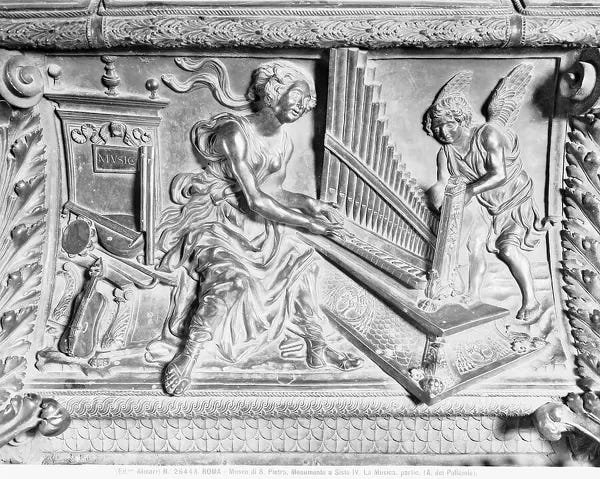
Even angels have to work the bellows sometimes. Funeral monument for Pope Sixtus IV (c. 1484) by Antonio del Pollaiuolo.
Paul Hofhaimer playing in a wagon-organ. Woodcut by Hans Burgkmair, from The Triumphal Procession of the Emperor Maximilian I (1517)
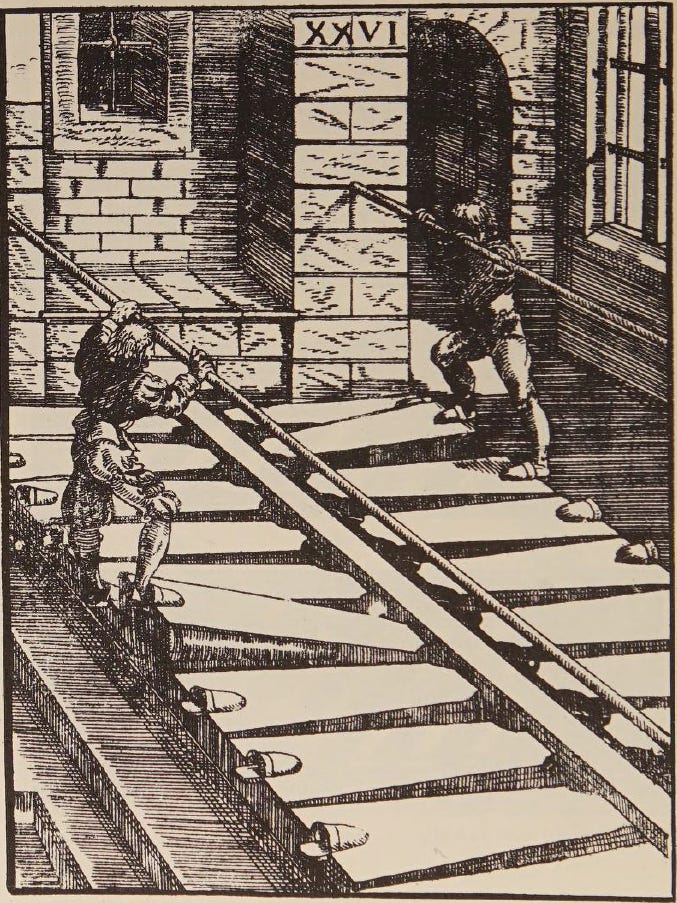
Two people working a massive bellows, presumably beneath a large organ. From Michael Praetorius’ Theatrum instrumentorum (1620)
From L’Art du facteur d’orgues [The Art of Organ-Building] by Dom Bédos de Celles (1766 - 1778).
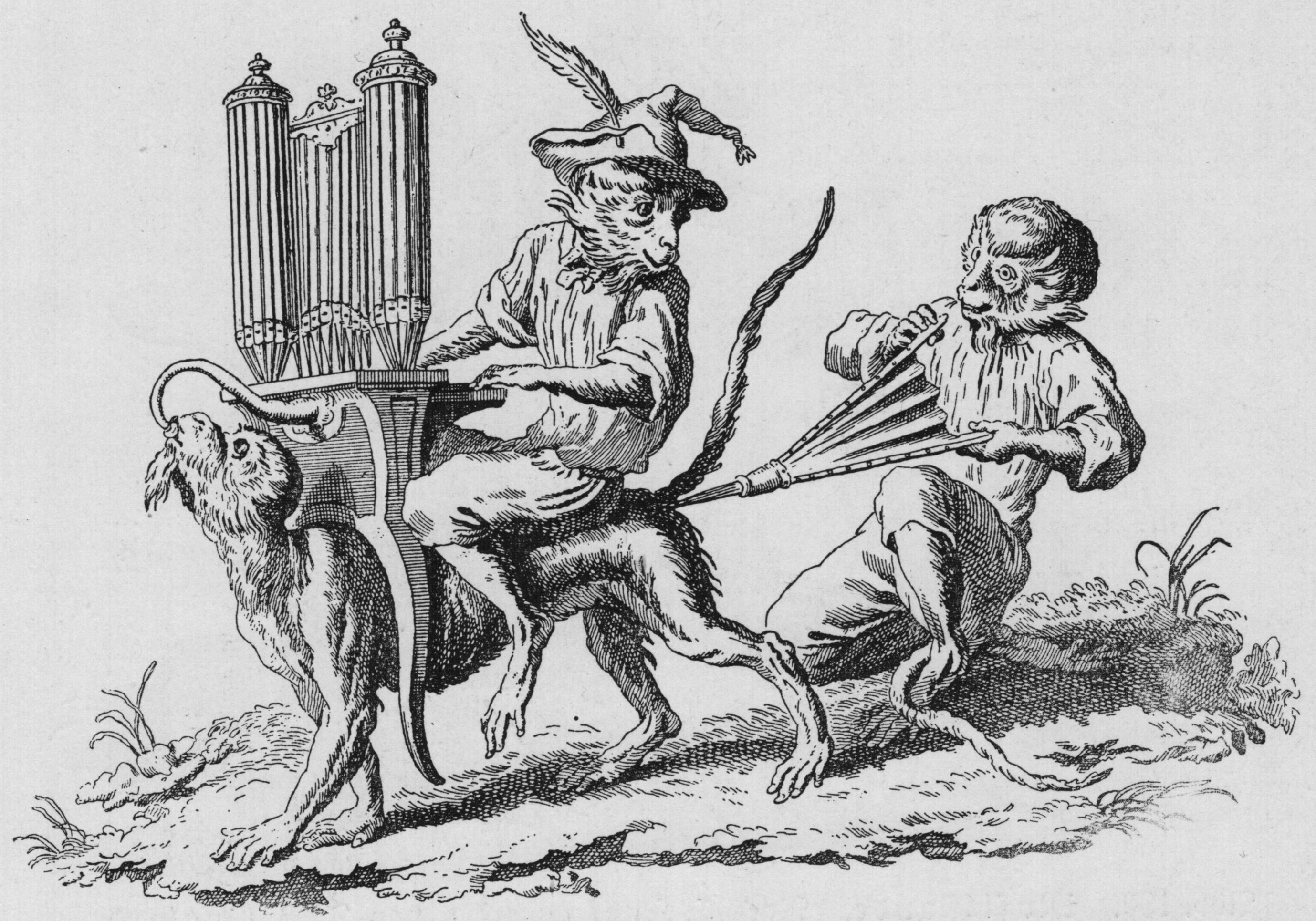
Wanderorgel (Traveling Organ) — a fascinating inversion of the well-known Medieval butt trumpet. Original source unknown; reproduced in Karl Storck, Musik und Musiker in Karikatur und Satire. Eine Kulturgeschichte der Musik aus dem Zerrspiegel (1911).